
How to Sell a Private School or Career College: A Planning Guide for Owners
By Doug Halladay, President and Senior Partner, Halladay Education Group. Doug has advised on more than 50 private education transactions across Canada, the U.S. and internationally since 2005.
If you are wondering how to sell a private school or career college, the single most important step is to start planning early. Owners who prepare 12 to 24 months ahead sell on their own terms. Owners who wait often end up selling on the buyer's terms. This guide covers when to start, how to prepare, what buyers pay more for, and the mistakes that cost sellers money.
When should I start planning the sale of my school?
Start 12 to 24 months before you want to go to market. That gives you time to clean up your financials, strengthen your leadership team and fix any compliance issues before a buyer looks closely.
Year-end is the natural place to begin. Your fiscal year is closing, next year's budget is taking shape, and you can see enrollment for the coming term. The year you finish now becomes part of the track record every buyer will study. A strong, well-documented year makes your school easier to market and easier to finance.
Here is how that plays out. Picture two career college owners, both planning to retire in the same year.
The first starts two years out. She hires a director of education to run the day-to-day, has her accountant clean up three years of statements, and confirms her provincial approvals will carry over to a new owner. When she goes to market, several buyers compete for the school, and she negotiates terms that let her step away within months of closing.
The second owner waits. After a tough enrollment year and growing burnout, he decides to sell quickly. His financials mix personal and business expenses, he is still the only person who knows how the school really runs, and his lease cannot be assigned without the landlord's consent. Fewer buyers show interest, the one serious offer comes in lower, and he is asked to stay on through a long transition.
Same type of school, same market. The difference was time.
How do I prepare my school for sale?
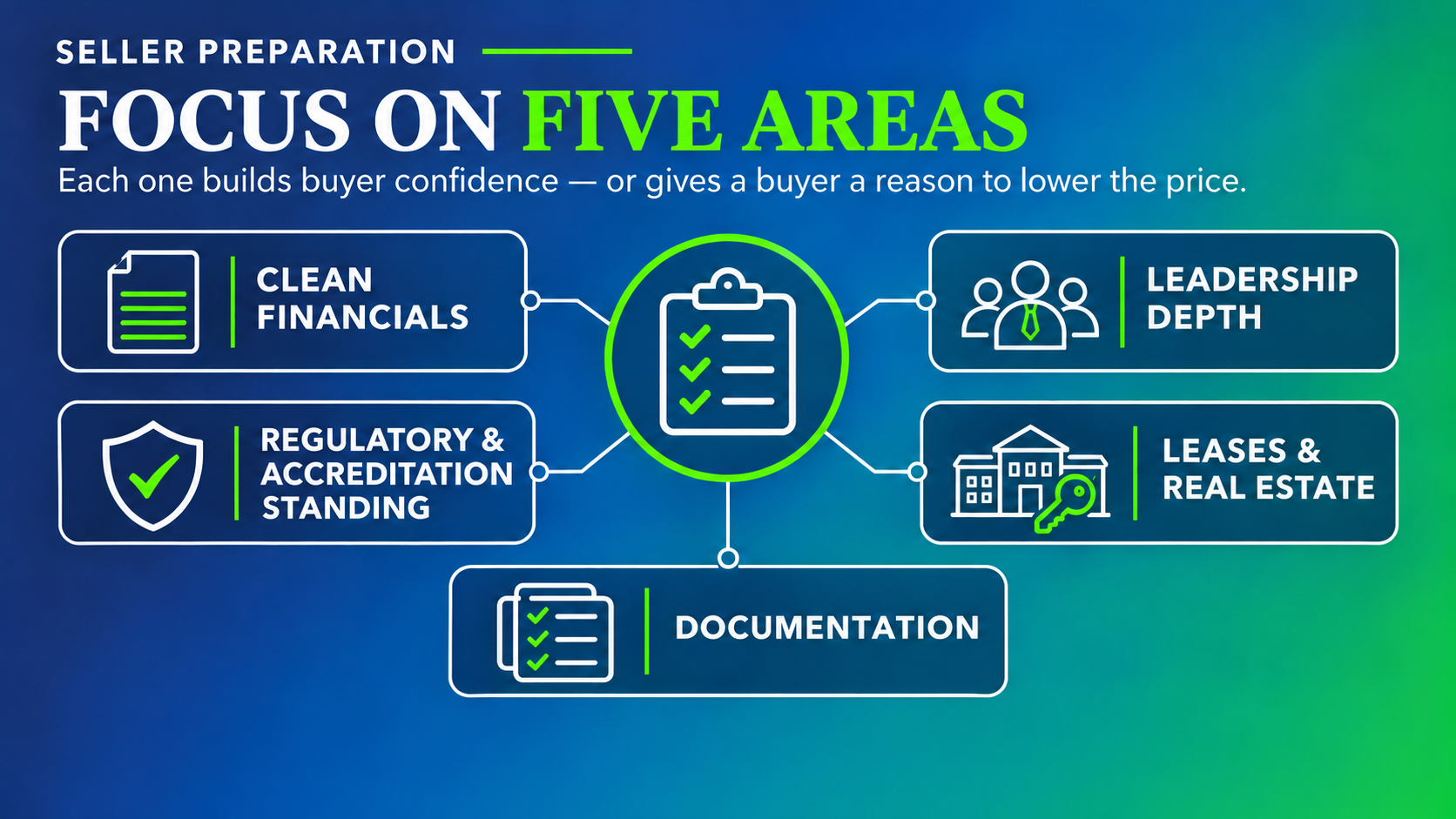
Focus on five areas. Each one either builds buyer confidence or gives a buyer a reason to lower the price.
- Clean financials. Separate personal and business expenses, document owner compensation, and make sure your statements tell a clear story. Ask your accountant whether reviewed or audited statements make sense for your school.
- Regulatory and accreditation standing. Confirm your licences, accreditations and approvals are current. Find out early how a change of ownership affects them, because the rules differ by province and state.
- Leadership depth. A school that runs well without the owner in the building every day is worth more. Build and empower your senior team now.
- Leases and real estate. Know your remaining lease term and whether the lease can be assigned. If you own the property, decide whether it is part of the sale.
- Documentation. Gather enrollment history, retention, graduate outcomes, staff agreements and key contracts in one place. Buyers will ask for all of it, usually early.
What makes a private school or career college more valuable?
Buyers pay more for certainty. The schools that draw the strongest interest usually have:
- Stable or growing enrollment
- Revenue spread across programs, funding sources and student markets
- A strong reputation and measurable student outcomes
- A leadership team that will stay after closing
- A clean compliance record
Value drops when the opposite is true. Heavy reliance on the owner, falling enrollment, open compliance issues, or dependence on one country of origin or one student funding program all make buyers cautious. Policy changes on international students and student aid in both Canada and the U.S. have made buyers look harder at where a school's students and revenue come from.
What mistakes do school owners make when selling?
These are the ones that cost owners the most:
- Waiting too long. Burnout, health or a bad enrollment year can force a sale at the worst possible moment.
- Anchoring on the wrong number. Public company multiples or a friend's sale rarely reflect what your school will bring in a private transaction.
- Talking to only one buyer. One interested party sets the terms. Competition protects both price and deal structure.
- Breaking confidentiality. If staff, families or students hear about a sale too early, enrollment and morale can suffer.
- Taking your eye off the school. Results often slip during a sale, and buyers notice.
- Leaving tax and legal structure to the end. Whether you sell shares or assets can make a real difference to what you keep. Bring your accountant and lawyer in early.
Frequently asked questions
How long does it take to sell a private school?
It depends on the size of the school, the regulatory approvals involved and the level of buyer interest. Plan for 12 to 24 months of preparation before going to market, then allow time for marketing, buyer due diligence and regulatory sign-off.
How is a private school or career college valued?
Most buyers start with earnings, usually EBITDA adjusted for owner-specific expenses. They then weigh enrollment trends, regulatory standing, leadership, and whether real estate is included. Every school is different, which is why a professional valuation matters before you set expectations.
Should I sell shares or assets?
It depends on your tax position, your licences and accreditations, and what the buyer wants. The choice can significantly affect your after-tax proceeds, so get advice from your accountant and lawyer before you go to market.
Will my staff and families find out I am selling?
Not if the process is run properly. Buyers sign non-disclosure agreements, and early marketing materials identify a school by number, not by name. Staff and families are usually told once a deal is secure.
Do I need an advisor to sell my school?
You can sell on your own, but a specialist advisor brings qualified buyers, competitive tension and a confidential process. HEG's buyer database includes more than 15,000 contacts across 32 countries.
Ready to talk about selling your school?
The decisions you make in the next few months will shape what your school is worth when you sell, whether that is next year or five years from now.
Book a confidential, no-obligation conversation with Doug Halladay. You will get a candid view of where your school stands today, what buyers are looking for right now, and what to do over the next 12 months to protect your value.
Call 1.800.687.1492 or email info@halladayeducationgroup.com to book your call.
